
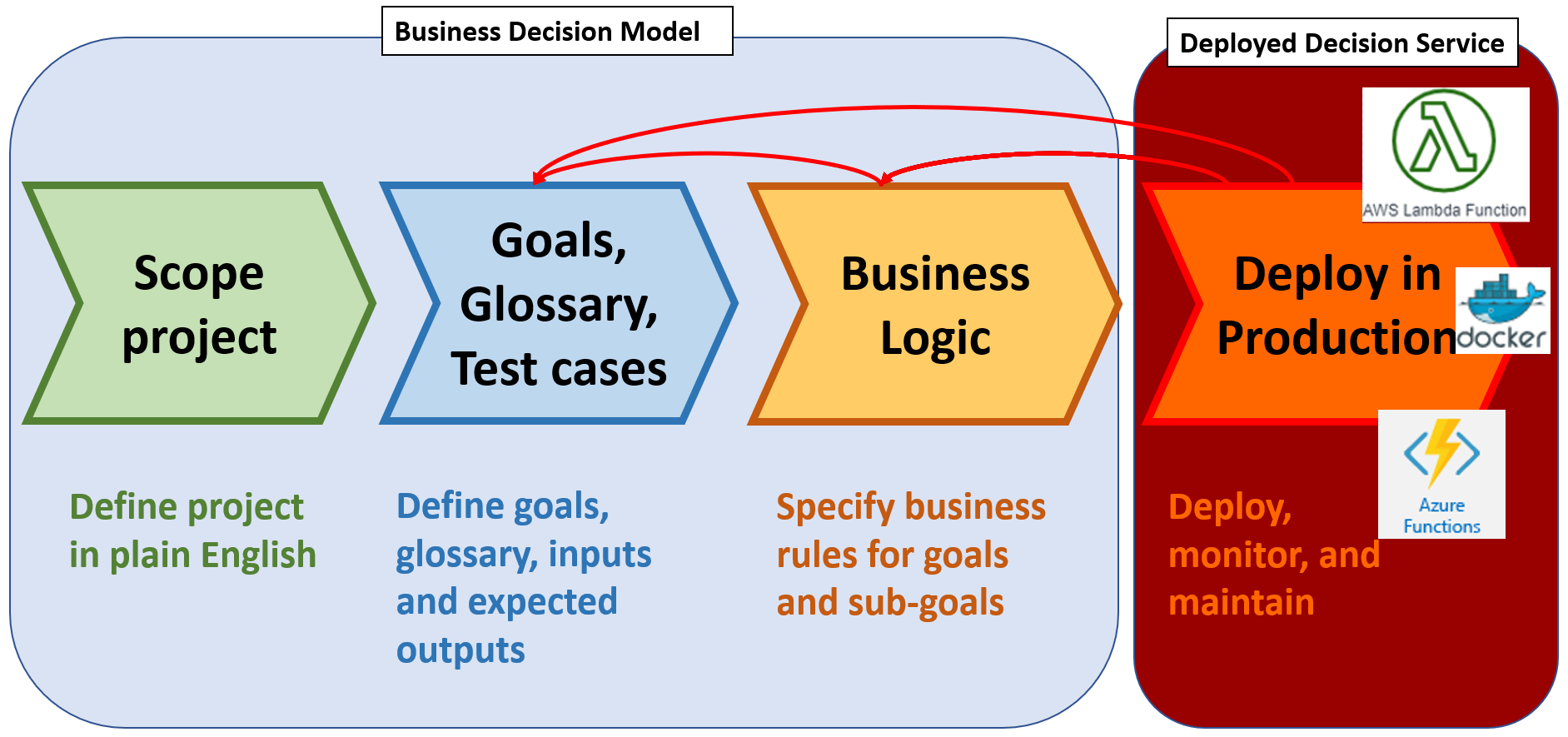
The lifecycle of a decision service is presented on this scheme:
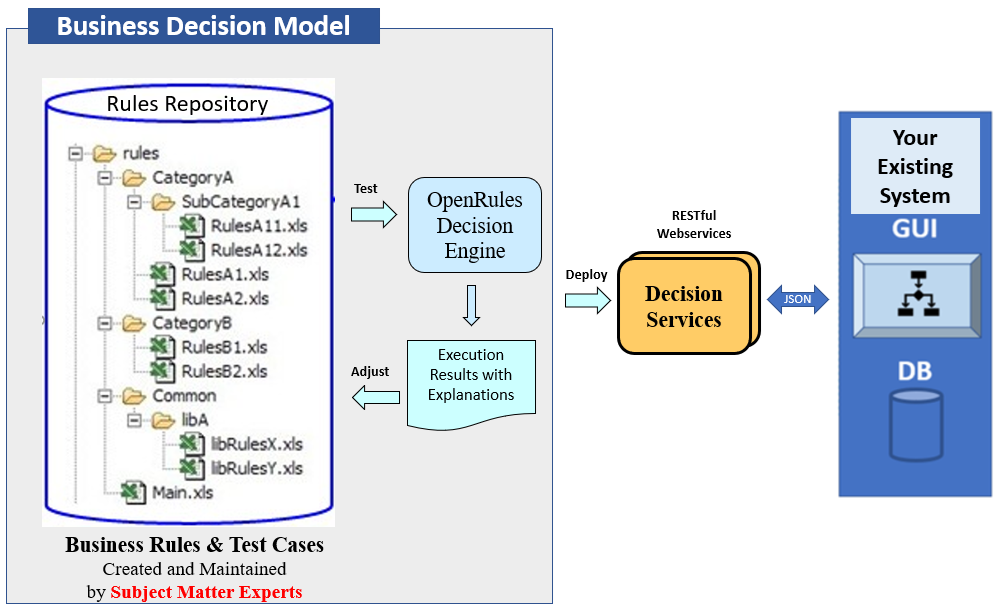
Decision services are based on business decision models usually created, tested, and maintained by business analysts in the Rules Repository using only familiar tools such as Excel (or Google Sheets) and OpenRules Decision Modeling IDE:
Tested decision models can be deployed on-premise or on the cloud using the standard frameworks provided by major vendors:
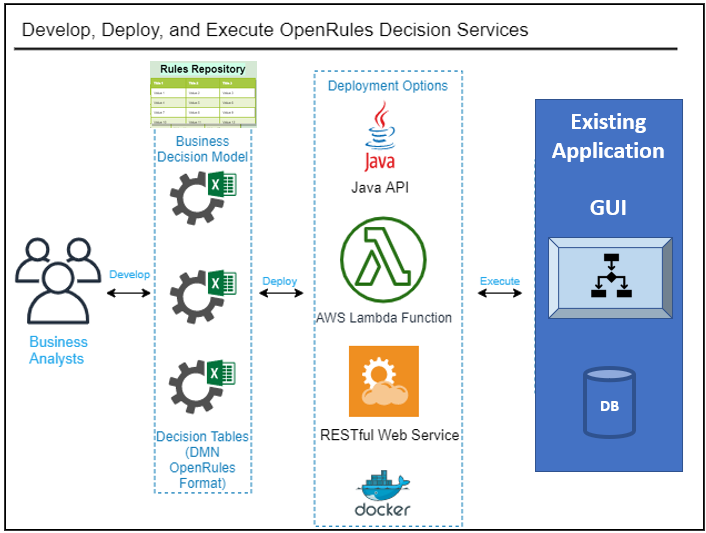
OpenRules Decision Manager supports Serverless Architecture for Decision Microservices. With a push of a button, it can deploy decision models as microservices using different deployment options described here.
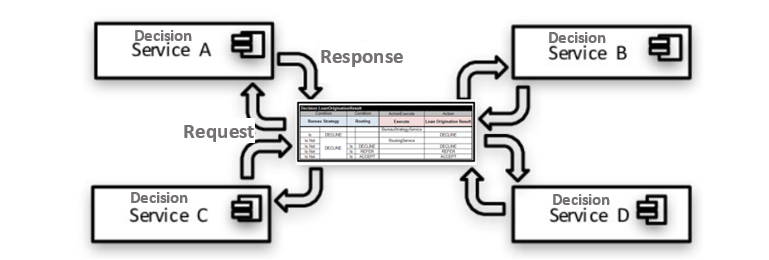
To support Service Orchestration of decision services, OpenRules supports special decision tables for assembling new decision services using the existing decision services with orchestrating logic described in business rules.
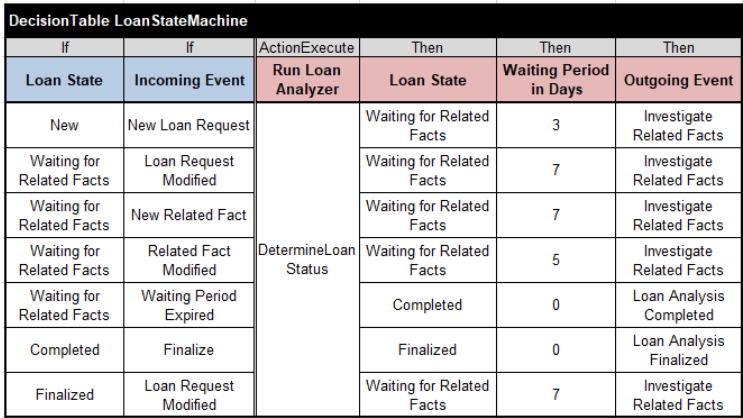
To support the Choreography of decision services with event streams, you may use OpenRules State Machines:
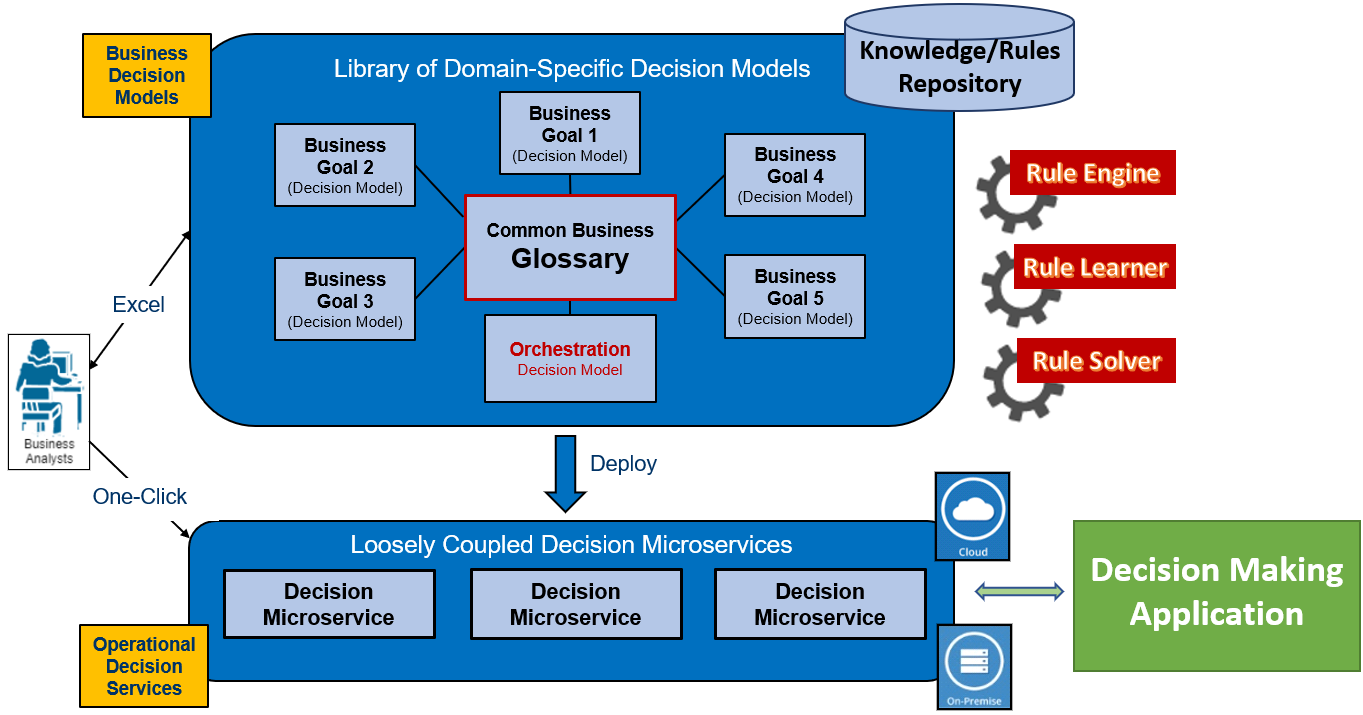
OpenRules Decision Manager supports the development of domain-specific libraries of decision services.
You may download, analyze, and execute complex decision services for the Loan Origination Domain.
OpenRules uses the AWS for its subscriptions and metering flows.