Combined model
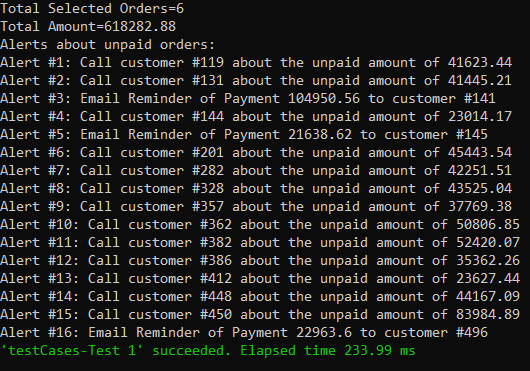
Bring order totals and unpaid alerts together.
The standard installation includes Evaluate Orders and Unpaid Orders. The SQL Inside Rules project combines both models and adds more advanced capabilities.
Repository structure
Organize selection, glossary, rules, and environment.
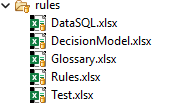
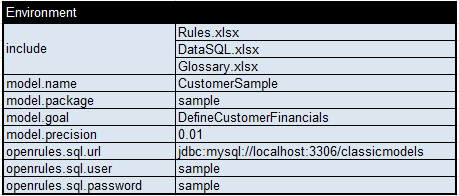
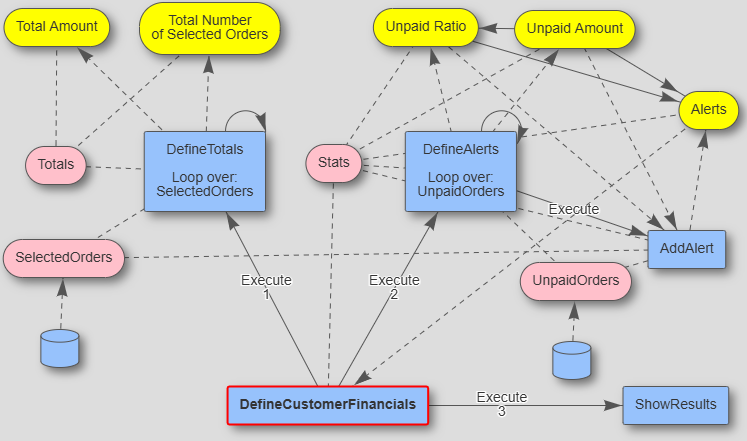
DataSQL.xlsx contains the SelectedOrders and UnpaidOrders DataSQL tables. Glossary.xlsx contains their corresponding glossaries.
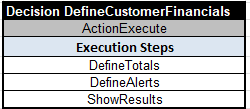
Rules.xls contains the business rules and the main DefineCustomerFinancials table, which calls DefineTotals, DefineAlerts, and ShowResults. DecisionModel.xlsx contains the Environment table and references the other files.
Execute and deploy
Run locally, call from Java, or expose REST.
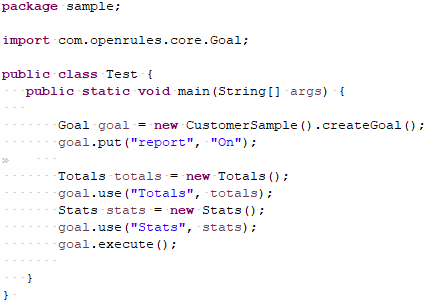
Run test.bat to produce combined results. A standard Java API example is included in src/test/java/Test.java; enable it with run.class=sample.Test in project.properties.
The model can also run as a REST service. Execute runLocalServer, then use POSTMAN with http://localhost:8080/customer-sample and an empty JSON request {}.